





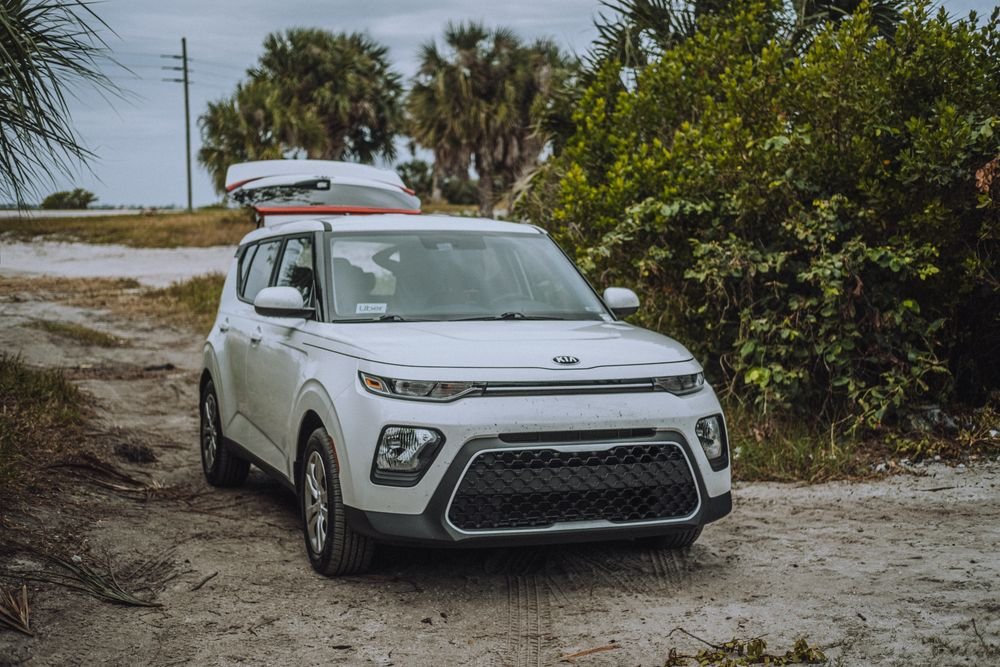
The Kia Soul was one of the most recognizable vehicles on U.S. roads for nearly two decades. Its boxy shape, affordable price, and distinct personality helped it sell over 1.5 million units in America. Now, production is ending after the 2025 model year, and no 2026 version is planned.
This article breaks down why Kia is walking away from the Soul, how sales shifted over time, what role lineup strategy played, and what current shoppers or owners should know before making any decisions.
The Kia Soul Is Discontinued — Here Is What That Actually Means
There is some confusion around the word “discontinued,” so it helps to be specific. The Kia Soul is not already gone. Kia built 2025 model year units, and some may still be sitting on dealer lots. However, production is scheduled to end in South Korea in October 2025, and Kia has confirmed there will be no 2026 Soul.
This is not a temporary pause or a quiet refresh delay. Multiple outlets — including Car and Driver, Edmunds, and Autoblog — have confirmed that the Soul is leaving the lineup for good. Kia has not announced plans to revive the model in a future generation.
If you are in the market for one, the window is closing. Reports from Car and Driver noted only a small number of units remained at dealerships at the time of reporting, and Kelley Blue Book estimated roughly 100 Soul hatchbacks left on lots nationally. That number will only go down from here.
How Soul Sales Changed From Peak to Decline
The Soul was not discontinued because it was a bad product. It was, by most measures, a commercial success. The model reached its U.S. sales peak in 2016 with 154,768 units sold in a single year. That is a strong number for a compact hatchback competing against a crowded market.
By 2024, annual U.S. sales had dropped to approximately 52,397 units. That is a significant decline — roughly two-thirds below its peak volume. Over its full run, the Soul sold around 1.5 million units in the United States, making it Kia’s all-time bestselling U.S. vehicle by some accounts.
So the Soul did not fail. The market shifted around it. Declining volume alone does not always kill a model, but it does weaken the business case for continued platform investment, tooling updates, and manufacturing resources — especially when other models in the lineup are performing better and growing.
Think of it this way: a retailer might stop restocking a product not because it was poor, but because a nearby option in the same aisle started outselling it consistently. The shelf space goes where the demand is.
Kia’s Broader Shift Toward SUVs and Crossovers
The Soul’s exit is not just about one model’s numbers. It reflects a company-level decision about where the market is heading and where Kia wants to compete.
Over the past decade, consumer demand has moved steadily toward larger crossovers and SUVs. Buyers want higher ride height, more cargo room, and the visual profile of a utility vehicle — even if they never leave pavement. Kia has responded accordingly. Models like the Telluride, Sportage, and Seltos have drawn increasing buyer attention and align better with what the market is asking for right now.
TFLcar reported that Kia America’s sales VP described the brand’s focus shifting toward utility vehicles. The K4 sedan is now positioned to anchor Kia’s entry-level car segment, which means the Soul no longer has a clear lane in the lineup. It was filling a space that other models are now covering more effectively.
Small, boxy hatchbacks are a narrowing niche. This is not a Kia-specific trend. Across the broader industry, this category has contracted as consumers gravitate toward crossovers. When the category shrinks and the lineup already has overlapping options, the business case for keeping the model alive becomes harder to justify.
Cars24 has noted that hatchbacks in this segment tend to carry lower profit margins than crossovers, which adds another layer to the financial reasoning behind Kia’s decision.
How the Seltos Overlapped With the Soul’s Purpose
One of the more practical explanations for the Soul’s exit is internal lineup overlap. The Kia Seltos occupies very similar space — compact size, affordable price point, useful cargo room, and an accessible entry-level experience. The difference is that the Seltos fits Kia’s SUV-forward identity better than the Soul ever could.
Automakers rarely maintain two models that serve the same buyer need if one of them aligns better with the brand’s current direction. It creates internal competition, splits marketing resources, and often confuses buyers who are comparing similar options side by side.
The Soul’s distinct personality was a genuine strength when boxy, character-driven hatchbacks were having a moment. But buyer priorities have shifted. Today, more shoppers prioritize ride height, all-wheel drive availability, and the utility-vehicle aesthetic — areas where the Seltos has a natural advantage.
Kia has not officially named the Seltos as a direct replacement for the Soul. But in practical terms, it is the most logical option for buyers who valued what the Soul offered — compact dimensions, manageable pricing, and everyday practicality — and now need somewhere to go.
What This Means for Current Soul Owners
If you already own a Kia Soul, there is no immediate cause for concern. A model ending production does not mean parts disappear overnight or that service becomes impossible. Kia dealerships will continue to support existing Soul owners with maintenance, parts, and warranty service for years ahead.
Resale value is worth monitoring. Limited future supply of new units could support used Soul values in the short term, particularly for well-maintained examples. But long-term resale will depend on demand, and that is harder to predict as the model fades from public view.
For business owners or fleet managers who have relied on the Soul for its compact size and low operating cost, the Seltos is the most direct alternative worth evaluating. It offers similar dimensions and comparable pricing while fitting the current Kia lineup structure.
For broader context on how discontinued vehicles affect ownership decisions and used-car strategy, MyBizOutlook covers practical topics like these across the automotive and business space.
Final Thoughts
The Kia Soul is being discontinued because three things happened at once: sales volume declined significantly from its 2016 peak, buyer preferences moved toward crossovers and SUVs, and Kia’s own lineup evolved to include models that serve the same audience more effectively.
None of that makes the Soul a failure. It sold over 1.5 million units in the U.S. and held a unique place in the market for 17 years. That is a legitimate run for any vehicle.
But the automotive market does not reward sentiment. It rewards alignment between product and demand. Right now, compact boxy hatchbacks are not where the demand is, and Kia has made the calculated decision to redirect its resources toward models that are.
If you are considering buying one of the remaining 2025 units, move quickly. Inventory is limited, and once it is gone, the Soul is gone with it.
Read Also: