





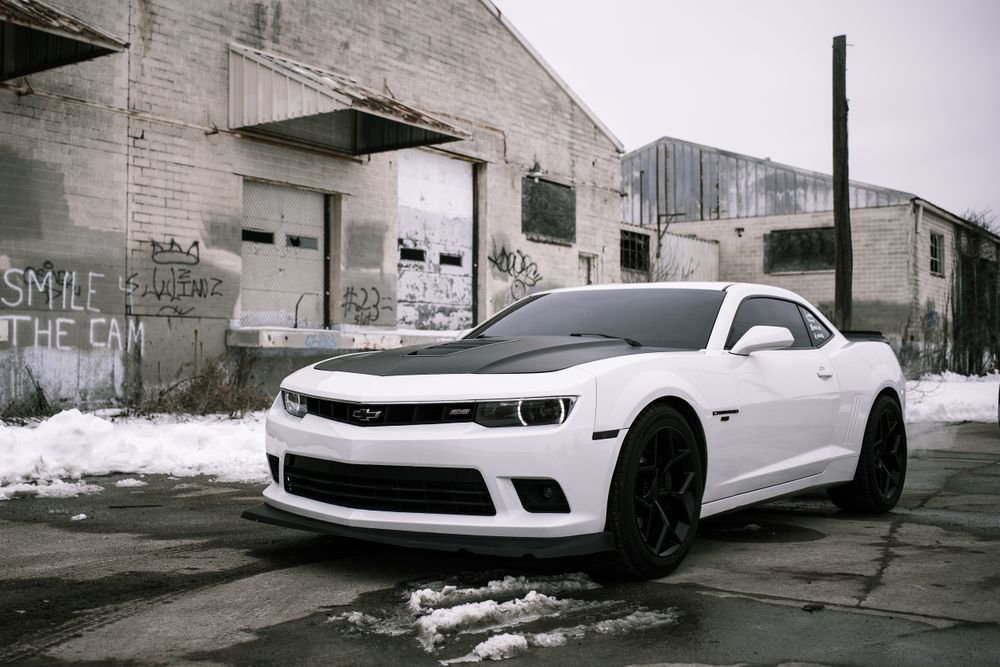
After nearly six decades on the road, the Chevrolet Camaro rolled off the assembly line for the last time in January 2024. It wasn’t a single dramatic failure that ended it. Instead, several industry pressures converged at once — and the Camaro simply ran out of room to survive them all.
This article covers the confirmed timeline, the business logic behind GM’s decision, what the sales numbers actually showed, how emissions regulations played a role, and what may come next for the Camaro nameplate.
The Official Decision and What GM Actually Said
In March 2023, General Motors announced that 2024 would be the final model year for the sixth-generation Camaro. Production at the Lansing Grand River Assembly plant in Michigan wrapped up in January 2024.
Chevrolet Vice President Scott Bell acknowledged the significance of the moment but tried to leave the door open. He stated, “this is not the end of Camaro’s story.” However, no specific successor was announced alongside that statement.
It’s worth noting this is the second time the Camaro has been discontinued. The first ended after the 2002 model year, and the nameplate was brought back for 2010. That history gives some fans reason for optimism — but the circumstances this time are quite different, as you’ll see below.
Sales Were Declining Long Before the Announcement
The writing had been on the wall for years. At its peak, the sixth-generation Camaro was selling over 90,000 units annually. By 2020, that number had dropped to fewer than 50,000.
The decline wasn’t limited to the United States. In 2019, international Camaro sales fell between 6.9% and 37% across key markets including Europe, Mexico, and South Korea. These aren’t minor fluctuations — they represent a sustained shift in buyer preferences.
The broader sports car and muscle car segment has been contracting for years. Consumers have moved toward SUVs and crossovers at a steady pace, and performance coupes have struggled to keep up. Think of it like a retailer — when demand shifts, resources follow the bestsellers, not the niche products.
The Camaro wasn’t the only performance car feeling this pressure, but its sales decline made it a clear candidate when GM began reassessing its product lineup.
The Business Case No Longer Held Up Against Trucks and SUVs
Even setting aside the overall segment decline, the internal math at GM stopped working in the Camaro’s favor.
A two-door coupe like the Camaro might sell tens of thousands of units in a good year. By contrast, a crossover or pickup truck can move hundreds of thousands of units annually, often at higher profit margins. When a company has limited engineering and manufacturing resources, the low-volume product is always at risk.
Within GM’s own lineup, the Camaro also had to compete for attention and budget against the Chevrolet Corvette — a more prestigious performance vehicle — and an expanding range of high-performance trucks and SUVs. That’s a tough internal fight to win.
There were also practical criticisms that kept narrowing the Camaro’s buyer pool. The sixth-generation model was frequently cited for its poor outward visibility, cramped rear seats, and limited everyday usability. Compared to rivals like the Ford Mustang and Dodge Challenger, the Camaro appealed to a smaller, more specific audience. That’s manageable when sales are strong — it becomes a liability when they’re not.
Plans for a seventh-generation gas-powered Camaro were reportedly shelved entirely. This is not a temporary production pause like what happened after 2002. As things stand, there is no confirmed gasoline-powered successor in development.
Emissions Regulations Made a High-Performance V8 More Expensive to Justify
Regulations didn’t kill the Camaro on their own — but they made it harder and more expensive to keep alive.
Stricter fuel economy and emissions standards require significant engineering investment with each new regulatory cycle. For a high-performance V8 vehicle selling in relatively modest volumes, those compliance costs eat directly into already thin margins. Think of it like tightening building codes — every revision adds cost and complexity, and smaller projects absorb that impact more sharply than large ones.
This isn’t a problem unique to the Camaro. Analysts and automotive journalists have framed its discontinuation as part of a broader trend: the gradual end of affordable V8-powered American performance cars. The Camaro just happened to be one of the first casualties of that combination of forces.
It’s important to be clear — regulations were a contributing factor, not the single cause. The decision resulted from sales declines, profitability concerns, shifting consumer preferences, and GM’s strategic pivot all working together.
GM’s Pivot to Electric Vehicles Changed the Product Priority List
General Motors has publicly committed to transitioning to an all-electric lineup by 2035. That corporate direction has real consequences for which products receive investment and which ones don’t.
Developing and maintaining a gasoline-powered performance coupe requires ongoing investment — in engineering, compliance, manufacturing, and marketing. When a company is reallocating resources toward an entirely new propulsion platform, lower-volume internal combustion vehicles become difficult to justify.
The Camaro’s situation mirrors what happened to other legacy products when industry priorities shifted. It’s not that the car stopped being good — it’s that it stopped fitting the direction the company was heading. One way to frame it: the Camaro was a typewriter in an era when GM was building laptops.
Resources freed up from the Camaro are more likely to flow toward GM’s electric vehicle programs and automated driving technology — both of which require enormous capital investment to remain competitive.
What Comes Next for the Camaro Name?
The honest answer is: no one outside of GM knows for certain.
Scott Bell’s statement that “this is not the end of Camaro’s story” suggests the nameplate has a future, but GM has not announced a concrete product plan. Analysts broadly expect that any future Camaro would be electric. Rumors of a four-door performance EV carrying the Camaro badge have circulated, but these remain unconfirmed.
What GM did confirm is the 2024 Collector’s Edition — a special package offered on RS, SS, and ZL1 variants, featuring unique badging to mark the end of the sixth generation. For enthusiasts, these limited models are likely to carry long-term collector value, similar to how last-year models from prior discontinuations have performed over time.
If the 2002 discontinuation is any guide, a future return is possible. But the conditions this time — an EV transition, shelved seventh-gen plans, and a shrinking performance car segment — suggest that if the Camaro does come back, it will look and drive very differently from what fans have known.
For readers who follow broader business and industry trends, coverage like this is regularly explored at MyBizOutlook, where market shifts across multiple sectors are tracked and explained.
What This Means for American Performance Cars
The Camaro’s exit is a signal, not just an isolated product decision. It marks a generational shift in what American performance cars will look like — and who will build them.
The Ford Mustang has survived partly because Ford positioned it as a broader lifestyle vehicle with more practical appeal. The Dodge Challenger and Charger faced their own discontinuations in 2023, with Dodge pivoting to an electric muscle car strategy. The era of affordable, gasoline-powered V8 muscle cars as a mainstream product category appears to be closing.
That doesn’t mean performance cars are disappearing. It means the next generation of them will likely run on electricity, carry different price points, and serve a different version of the same emotional purpose — speed, identity, and legacy.
Final Thoughts
The Chevrolet Camaro was discontinued because multiple forces aligned against it at the same time: falling sales, a shrinking market segment, internal competition from more profitable vehicles, rising compliance costs, and GM’s strategic shift toward electrification.
No single factor was solely responsible. The Camaro wasn’t discontinued because it was a bad car — it was discontinued because the market and the business case for it had fundamentally changed.
Whether the name returns on a future electric performance vehicle remains to be seen. For now, the sixth generation ends with a Collector’s Edition and an open question about what comes next.
Read Also: