





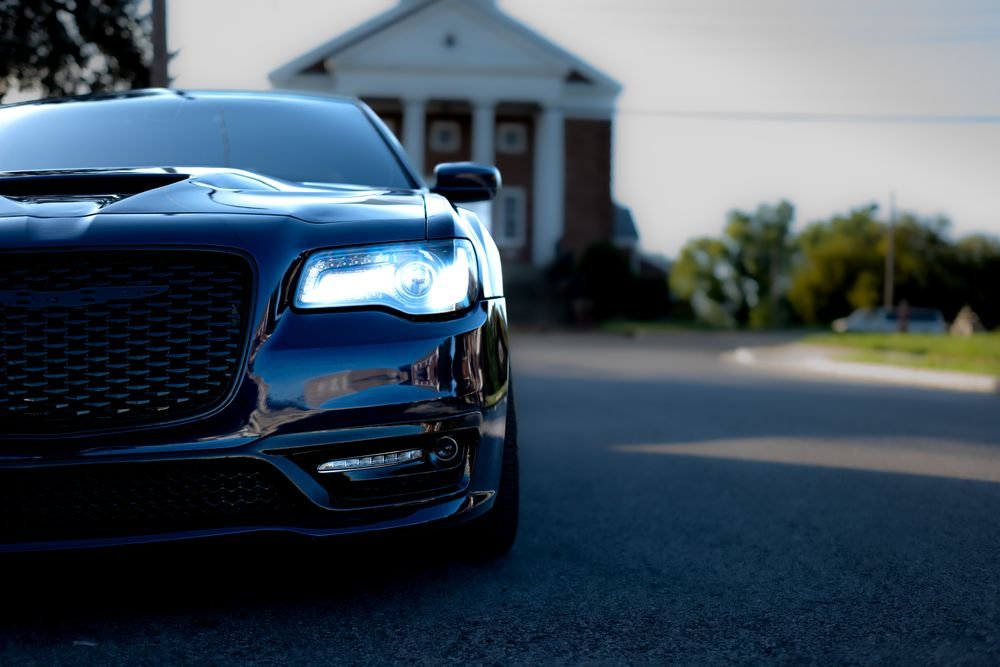
The Chrysler 200 was once positioned as a symbol of American automotive recovery. It appeared in a high-profile Super Bowl ad, carried genuine optimism behind it, and represented Chrysler’s push back into the mainstream sedan market. Yet by December 2, 2016, production had stopped quietly at the Sterling Heights assembly plant in Michigan.
No successor was announced. No replacement sedan was planned. The 200 was simply gone.
So what actually happened? The answer involves declining sales, weak profit margins, a deliberate company-wide strategy shift, and some product-level limitations that made it harder to compete. This article walks through each of those factors clearly.
When the Chrysler 200 Was Discontinued and How It Happened
The final production run carried a 2017 model year designation, but the assembly line stopped on December 2, 2016. So while some sources refer to it as a 2017 discontinuation, that framing is technically imprecise. The car was effectively done in late 2016.
This was not a sudden decision made overnight. In the months leading up to the shutdown, the Sterling Heights plant had already seen production slowdowns and layoffs. Workers and industry observers could read the signals well before any formal announcement came.
Chrysler still lists the 200 as a discontinued model on its official site, with no announced successor sedan. The factory itself was eventually repurposed to support other production needs, reinforcing that FCA had no intention of returning to that vehicle segment anytime soon.
Sales Dropped Sharply After the 200’s Best Year
The 200 had its strongest sales performance in 2015. After that, the numbers declined meaningfully. When a vehicle’s sales trajectory reverses in a segment that was already competitive, it becomes difficult to justify continued investment in production, marketing, and future updates.
The midsize sedan market was crowded with well-established competitors. The Toyota Camry, Honda Accord, and Nissan Altima had loyal customer bases built over decades. The Chrysler 200 was a relative newcomer trying to gain ground against vehicles with deep brand recognition and proven reliability reputations.
Once volume started falling, the financial case for keeping the 200 in production weakened quickly. It is worth understanding that automakers do not make discontinuation decisions based on whether individual owners are satisfied. They make those decisions based on sales volume, return on investment, and long-term demand projections. The 200’s numbers simply did not support continued production.
FCA’s Leadership Called It One of the Least Profitable Products in the Lineup
Sales volume is one piece of the picture. Profitability is another, and in the case of the Chrysler 200, this was arguably the more revealing factor.
FCA CEO Sergio Marchionne was direct on this point. He described the Chrysler 200 as one of the company’s least financially rewarding vehicles. Even when the car was selling, the margins were thin. Passenger sedans, particularly in the midsize segment, had long struggled with narrow profit margins compared to trucks and SUVs.
Think of it like a restaurant menu. A dish might sell steadily, but if it costs nearly as much to prepare as it earns in revenue, a restaurant owner will eventually replace it with higher-margin items. That same logic applies to vehicle lineups. A car that moves units but generates little return does not earn its place in a portfolio when capital could be directed elsewhere.
Marchionne was careful to frame the 200’s cancellation not as a product failure in isolation, but as a capital allocation decision. The company needed to direct its resources toward vehicles that would generate better financial returns.
FCA Shifted Its Entire Strategy Toward SUVs and Trucks
The Chrysler 200’s cancellation was not an isolated event. It was one piece of a deliberate company-wide pivot away from passenger cars.
Around the same time, FCA also cancelled the Dodge Dart, another passenger sedan that had similarly struggled. The near-simultaneous cancellation of two sedans made the message clear: this was not about any single model underperforming. This was FCA making a strategic decision to exit the passenger car segment and concentrate on utility vehicles and pickup trucks.
Marchionne stated publicly that FCA was shifting manufacturing focus because that was where consumer demand was heading and where the company could earn stronger margins. SUVs and trucks were commanding higher transaction prices and generating better returns per unit sold.
Consumer buying patterns were already shifting clearly in that direction during the mid-2010s. Crossovers and SUVs were gaining market share steadily, and automakers across the industry were adjusting their portfolios accordingly. FCA simply moved more decisively than some others.
Consider a basic market analogy: if most homebuyers start preferring larger homes in suburban areas, developers shift construction resources toward that demand. Continuing to build compact urban apartments when the market has moved on is a financially poor decision. FCA applied the same reasoning to its vehicle lineup.
The 200 Also Had Product-Level Weaknesses That Hurt Its Competitive Position
While market trends and business strategy were the primary drivers of the 200’s cancellation, the car itself had some meaningful limitations that made it harder to compete effectively.
One of the most frequently cited criticisms was the nine-speed automatic transmission. Reviews and driver feedback pointed to noticeable issues with how the transmission performed, including hesitation and inconsistent behavior under certain driving conditions. In a segment where buyers expected polished, refined driving experiences, transmission problems stood out.
Rear-seat space was another area where the 200 fell short. The design of the interior, particularly the raised center console and the way the cabin was packaged, limited rear passenger comfort more than buyers expected in a midsize sedan. For families or buyers who regularly carried rear passengers, this was a practical disadvantage against competitors with more spacious back seats.
These product-level issues did not cause the discontinuation on their own. But they made it harder for the 200 to build the kind of strong consumer loyalty that might have justified continued investment. In a competitive segment, weaknesses in core areas tend to push buyers toward more established alternatives.
What Happened After the 200 Was Discontinued
After production ended, FCA repurposed the Sterling Heights assembly plant. The factory capacity that had been used for the 200 was directed toward vehicles that aligned with the company’s revised strategy. This was a clear signal that the decision was final and forward-looking, not a temporary production pause.
Chrysler did not introduce a replacement sedan. The brand’s focus shifted toward its remaining lineup of trucks and SUVs under the broader Stellantis umbrella, which formed when FCA merged with PSA Group in 2021.
The 200 remains a notable model in the used car market, partly because it was a relatively recent mainstream sedan with a short production lifecycle. Buyers looking at used sedans still search for it, which is a reflection of the fact that the car had genuine appeal for many drivers, even if the business case for continuing it did not hold up.
For more automotive industry analysis and business coverage, MyBizOutlook covers a range of topics that connect market trends with practical business decisions.
Final Thoughts
The Chrysler 200 was discontinued because of a combination of factors working together, not one single cause. Sales declined after the model’s peak year, profitability was weak even when volume was adequate, FCA made a deliberate company-wide decision to exit passenger cars, and the product itself had limitations that hurt its ability to compete in a crowded segment.
It was not discontinued purely because it was a bad car. Many owners liked it. But in the automotive industry, a car’s future depends on more than owner satisfaction. It depends on whether the numbers work, whether the margins justify continued investment, and whether the vehicle fits where the company is heading.
For the Chrysler 200, the honest answer is that none of those conditions held by late 2016. The decision to end production was, by FCA’s own account, a rational business response to market conditions, financial realities, and a shifting consumer landscape.
Read Also: