





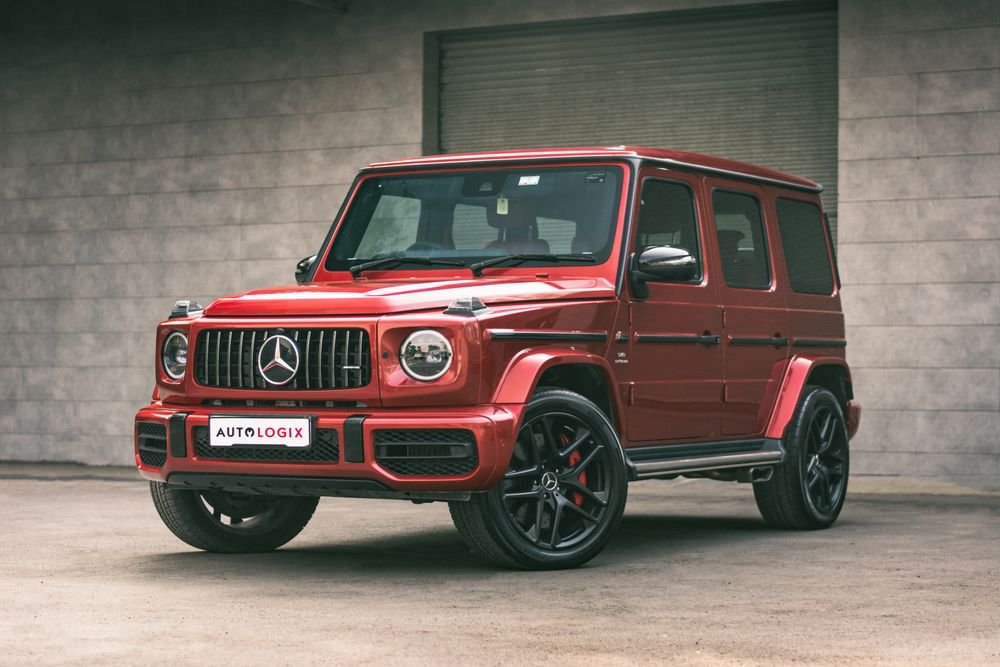
If you have spent any time on social media recently, you have probably seen posts claiming that Mercedes-Benz is discontinuing the G-Wagon. The headlines sound definitive. The TikToks sound urgent. But the reality is more specific — and more nuanced — than most of those posts suggest.
This article explains what is actually ending, what is replacing it, and what any of this means if you are a current owner or a potential buyer.
The G-Wagon Is Not Being Permanently Discontinued — Here Is the Actual Story
Mercedes-Benz has not announced a permanent, global discontinuation of the G-Class nameplate. What is ending is the current W463 generation, which launched in 2018 and is scheduled to conclude production in early 2024. That is a product-cycle transition — not a retirement of the model line.
Think of it like Apple stopping production of the iPhone 13. That does not mean the iPhone is dead. It means the next version is coming. The same logic applies here. The current G-Class generation is wrapping up so an updated version can follow.
Auto journalists and independent researchers have pushed back on the social media narrative. A TikTok creator cited in coverage of the story put it plainly: “No, the Mercedes G-Wagon is not getting discontinued.” They pointed out that the CEO never announced any permanent cancellation. What circulated online was a misreading of internal communications about ending the current generation — stripped of the context that a facelifted model was already in development.
AutoEvolution confirmed that the model is receiving a mid-cycle refresh, not a full cancellation. Wikipedia notes that production of the current W463 ends in March 2024, with an updated version expected later that same year.
A Brief Look at the G-Class and Why Its Transition Matters
The G-Class has been in continuous production since 1979, which makes it one of the longest-running models in the automotive industry. It started as a military and off-road utility vehicle and, over several decades, became one of the most recognizable luxury SUVs on the market.
Its defining characteristics — a boxy body-on-frame design, three locking differentials, and large V8 engines — are part of what made it iconic. They are also exactly the features that are under increasing pressure from modern emissions regulations and electrification requirements.
The G-Class is a low-volume, high-margin vehicle. Mercedes builds relatively few of them each year, but each one commands a significant price. It functions as a halo product for the brand — a statement piece that reinforces Mercedes-Benz’s identity at the top of the market. That status makes any change to the model significant, which is part of why transition news generates so much attention.
Why the Current Generation Is Being Phased Out
There are several legitimate reasons behind the end of the current W463 iteration. It helps to separate the structural, long-term reasons from the short-term disruptions that fed the discontinuation rumors.
Emissions and Regulatory Pressure
Large V8 engines in heavy body-on-frame SUVs face serious challenges under current and upcoming European and global emissions standards, including Euro 6 and Euro 7 regulations. Meeting CO2 targets with a vehicle of the G-Class’s size and weight requires significant engineering investment.
This is not speculation. When Mercedes paused U.S. orders for the G-Class and other V8 models for the 2022 model year, internal communications explicitly referenced compliance with external and internal global requirements as a factor. The G-Wagon’s traditional powertrain setup is increasingly difficult to certify without significant modification.
The Push Toward Electrification
Mercedes-Benz is repositioning itself around electric and low-emission vehicles. Continuing to produce a traditional, high-emission, gasoline-only G-Class without a clear path to electrification creates a contradiction in the brand’s stated direction.
Retiring the current ICE-only iteration creates the space needed to introduce electrified successors. A facelifted G-Class with updated powertrains is expected, and a fully electric variant — the EQG — is also in development. The EQG is reported to use four electric motors, one per wheel, and is expected to be capable of advanced off-road maneuvers including a tank-turn style movement. These are significant engineering upgrades that require a clean break from the current platform.
Manufacturing Cost and Aging Architecture
The G-Class is largely hand-built, which makes it expensive to produce even under normal conditions. Bringing the existing platform up to current safety standards, modern infotainment requirements, and evolving crash-test criteria adds further cost to an already expensive production process.
At a certain point, investing in an aging architecture to meet new requirements becomes less practical than building a new iteration from the ground up. That calculation appears to be where Mercedes landed.
Short-Term Disruptions: A Separate Issue
The 2022 U.S. order pause is worth addressing on its own, because it contributed heavily to discontinuation rumors but had different causes from the broader product-cycle change.
That pause was linked to semiconductor shortages affecting global auto production and to internal quality and compliance concerns specific to that model year. Some sources point to issues with V8 engine quality and supply chain constraints as contributing factors. These were temporary operational problems — not strategic decisions about the future of the G-Class nameplate.
Conflating the 2022 pause with the end of the current generation is a common mistake. They happened close together in time, but they do not have the same cause or the same implication.
What to Expect Next for the G-Class
Based on credible automotive reporting, a facelifted G-Class is expected to arrive later in 2024 following the end of current production. Expected changes include exterior restyling at the front and rear, interior and technology upgrades, updated driver assistance systems, and electrified powertrain options.
The fully electric EQG is expected to follow, with some reports placing wider availability around 2025. Mercedes has paused new orders for the current G-Class in some markets and is directing prospective buyers toward the facelifted model or the EQG.
For business and investment-minded readers, MyBizOutlook covers market and industry transitions like this across a range of sectors — worth following if you track how major brands manage product-line changes.
What This Means for Buyers and Existing Owners
If you are trying to buy a new G-Class right now, availability is limited. Current-generation production has wound down, and the facelifted model has not yet reached dealerships in volume. Some markets have extended lead times, and dealer markups on remaining stock are significant.
If you already own a G-Class, there is no cause for concern about long-term support. The model has been in continuous production for over four decades, parts supply is strong, and the global owner community is large. Existing vehicles are well-supported.
On the used market, naturally aspirated V8 G-Wagons — particularly lower-mileage examples — are increasingly scarce. Some enthusiasts already view the last pure ICE V8 versions as potential future collectibles, which is reflected in current used pricing. Whether that proves to be a sound prediction depends on how quickly the electric and hybrid variants gain acceptance.
The Broader Picture
The G-Wagon’s transition is not an isolated event. Across the automotive industry, large-displacement engines and heavy body-on-frame platforms are being re-engineered or phased out in response to tightening emissions standards. Performance sedans, sports cars, and now luxury off-roaders are all facing the same pressure.
The G-Class is arguably one of the harder vehicles to adapt — it is heavy, aerodynamically inefficient, and defined by a powertrain profile that conflicts with modern environmental targets. The fact that Mercedes is investing in both a facelifted version and a full electric variant suggests the brand sees long-term value in the nameplate. The better question, as one automotive publication put it, is not “why is the G-Wagon being discontinued?” — it is “how is the G-Wagon changing?”
The answer is: significantly, but deliberately. The G-Class is not being retired. It is being updated to survive the next era of automotive regulation and consumer expectation. That may disappoint purists who prefer the original formula, but it is a very different story from the one circulating on social media.
Read Also: